

Alumni Management Software Guide for Networking
Alumni management software guide to improve networking, manage alumni data, boost engagement, and build stronger lifelong connections.

Pabel Khan
An alumni management system is now an essential tool for schools, colleges, and universities that want to build strong connections with their graduates.
In 2026, institutions are using these platforms to improve communication, organize events, and increase fundraising.
Studies show that alumni donations contribute 25–30% of total fundraising revenue in many universities, proving the importance of effective engagement.
This alumni management software guide will explain how these systems work, why they matter, and what benefits they bring to organizations.
From networking and career support to fundraising and analytics, the features are designed to make alumni engagement simple and impactful.
For institutions planning an alumni management system project, this guide offers practical insights backed by industry trends and statistics.
| Software | Best For | Key Strengths | Rating (G2 / Capterra) | Short Review |
|---|---|---|---|---|
| Gradnet | Institutions needing all-in-one integration | Combines community building, fundraising, and event management | 4.8/5 (G2) | Saves time by replacing multiple tools; praised for scalability and ease of use. |
| Almabase | Universities focused on fundraising + donor engagement | Strong CRM integrations, automated campaigns, personalized outreach | 4.7/5 (Capterra) | Boosts donor participation significantly; some learning curve but high ROI. |
| Gravyty (Graduway) | Large institutions & nonprofits | AI-driven donor engagement, automated communication | 4.3/5 (G2), 4.4/5 (Capterra) | Powerful AI outreach; users note complexity but strong donor pipeline growth. |
| Hivebrite | Organizations needing customizable alumni hubs | Branded online communities, analytics, secure infrastructure | 4.4/5 (G2), 4.5/5 (Capterra) | Flexible and customizable; praised for analytics and community building. |
| ToucanTech | Schools & mid-sized universities | Easy setup, strong peer community, integrated CRM + website | 4.9/5 (Capterra), 5/5 (G2) | Extremely user-friendly; excellent support; quick adoption. |
| EverTrue | Advancement teams focused on prospect discovery | AI donor intelligence, mobile accessibility | 4.8/5 (Capterra), 4.3/5 (G2) | Great for donor prospecting; mobile-first design; pricing can be high. |
| PeopleGrove | Institutions prioritizing career networking + mentorship | AI-powered matching, job boards, career development | 4.7/5 (Capterra), 4.5/5 (G2) | Strong for mentorship and career readiness; onboarding requires effort. |
| 360Alumni | Small to mid-sized institutions | Affordable, cloud-based networking + fundraising | 4.6/5 (Capterra), 4.5/5 (G2) | Cost-effective solution; responsive support; ideal for smaller advancement teams. |
| Join It | Clubs, nonprofits, small schools | Simple CRM, automated payments, membership cards | 4.8/5 (G2) | Very easy to use; best for basic alumni management and payments. |
| Wild Apricot | Nonprofits & schools on tight budgets | Affordable membership + event management | 4.4/5 (Capterra), 3.8/5 (G2) | Feature-rich but UI feels dated; strong for budget-conscious organizations. |
What Is Alumni Management Software?
Many institutions struggle with alumni data scattered across spreadsheets, emails, and social platforms.
Alumni management software solves this by centralizing data, communication, events, fundraising, and networking in one platform.
It is more than a database. It allows advancement teams to track alumni interactions, segment audiences, and run targeted campaigns.
For example, recent graduates can receive career opportunities, while senior alumni get fundraising or leadership invites. This personalization drives higher engagement and loyalty.
Generic CRMs or LinkedIn groups often fail to manage reunions, donor tracking, or mentorship programs, leading to missed opportunities. Dedicated alumni platforms ensure every interaction is captured, analyzed, and acted upon.
By transforming manual coordination into a data-driven, scalable process, alumni management software helps institutions build active, lifelong communities instead of static contact lists, boosting engagement, donations, and long-term alumni relationships.
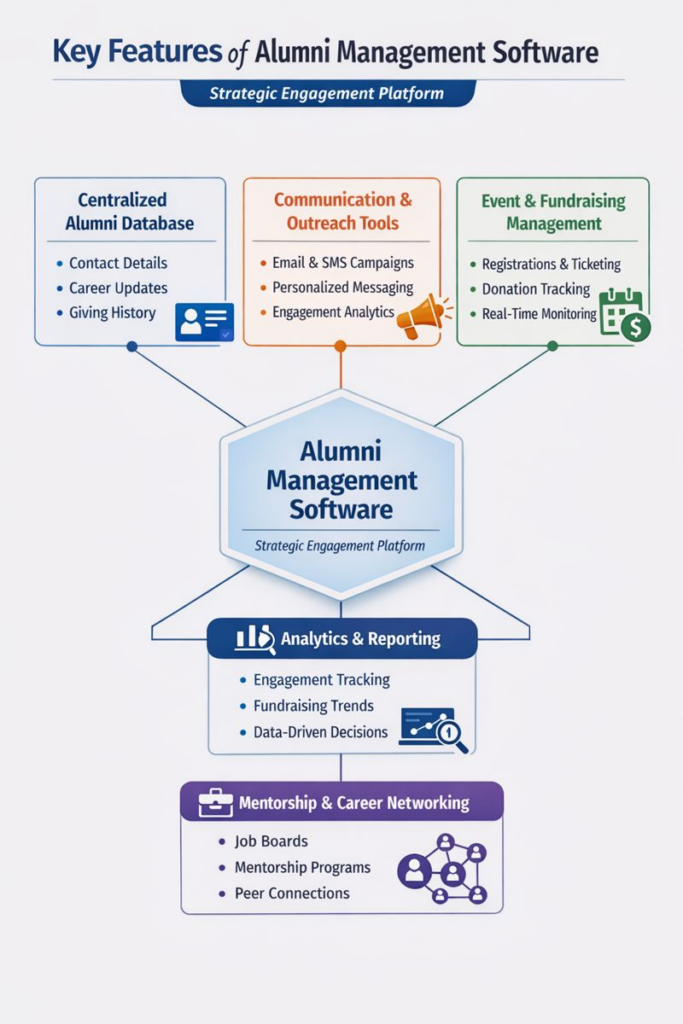
Key Features of Alumni Management Software
1. Centralized Alumni Database
Consolidates contact details, career updates, engagement history, and donation records.
Enables segmentation by class year, profession, or giving level, allowing teams to target communications effectively.
Institutions using segmented outreach report 25% higher event participation.
2. Communication & Outreach Tools
Automates emails, SMS, and social updates while tracking engagement metrics. Personalization ensures relevant messaging, e.g., mentoring invitations for recent graduates or leadership updates for senior alumni, boosting loyalty and long-term support.
3. Event & Fundraising Management
Streamlines reunions, webinars, ticketing, and donation campaigns. Real-time reporting ensures campaigns are tracked and optimized. For example, schools using integrated event and donation tools increased online fundraising by 28%.
4. Analytics & Reporting
Provides insights on engagement trends, donation patterns, and event success. Enables data-driven decisions, helping teams refine strategies and maximize ROI from alumni programs.
5. Mentorship & Career Networking
Facilitates job boards, mentor-mentee programs, and peer networking. Strengthens community bonds, enhances student support, and boosts institutional reputation through visible alumni success.
Why Alumni Management Software Matters in 2026?
Alumni Management Software matters in 2026 because it helps institutions build stronger alumni relationships, increase donations, and use data-driven tools to personalize engagement.
The global market is growing fast, valued at USD 1.2 billion in 2024 and projected to reach USD 2.5 billion by 2033 with a CAGR of 9.2%.
In 2026, Alumni Management USC Software is more than a communication tool. It is a strategic necessity.
Universities, schools, and organizations use it to maintain lifelong connections with their graduates.
With digital transformation reshaping education, alumni platforms ensure engagement, fundraising, and networking are managed efficiently.
1. Personalized Engagement
Alumni expect tailored communication. Research shows that over 70% of alumni prefer personalized updates instead of generic newsletters.
Alumni software allows institutions to segment alumni by profession, age, or interests.
This ensures young graduates receive career opportunities, while older alumni get donation programs. Personalized engagement builds loyalty and trust.
2. Fundraising and Donations
Alumni giving remains a major source of institutional revenue. Studies highlight that alumni contributions often account for 25–30% of total fundraising income in universities.
Alumni management software tracks donor behavior, automates campaigns, and provides transparency.
This data-driven approach increases participation rates and boosts donation amounts.
Example: Centenary College of Louisiana raised over $108,000 online in six months using an alumni management system for automated fundraising campaigns.
3. Career Networking
Modern alumni platforms integrate job boards, mentorship programs, and professional groups.
Reports show that 60% of alumni value career networking opportunities as their main reason to stay connected.
Institutions benefit by showcasing alumni success stories, which attract new students and strengthen reputation.
Example: College of Idaho connected graduates to internships and networking opportunities through its alumni platform, doubling event participation in one year.
4. Data and Analytics
Alumni software provides dashboards that track engagement, event attendance, and donation trends.
Institutions can identify which alumni groups are most active and design better outreach strategies. Analytics-driven decisions improve efficiency and maximize results.
Top Alumni Management Software Platforms
Choosing the right Alumni Management Software is important for schools, colleges, and universities that want to build strong connections with their past students.
Each platform offers unique strengths, from fundraising and engagement automation to career networking and customization.
Understanding what each software does best helps institutions select the right tool for their needs.
1. Gradnet
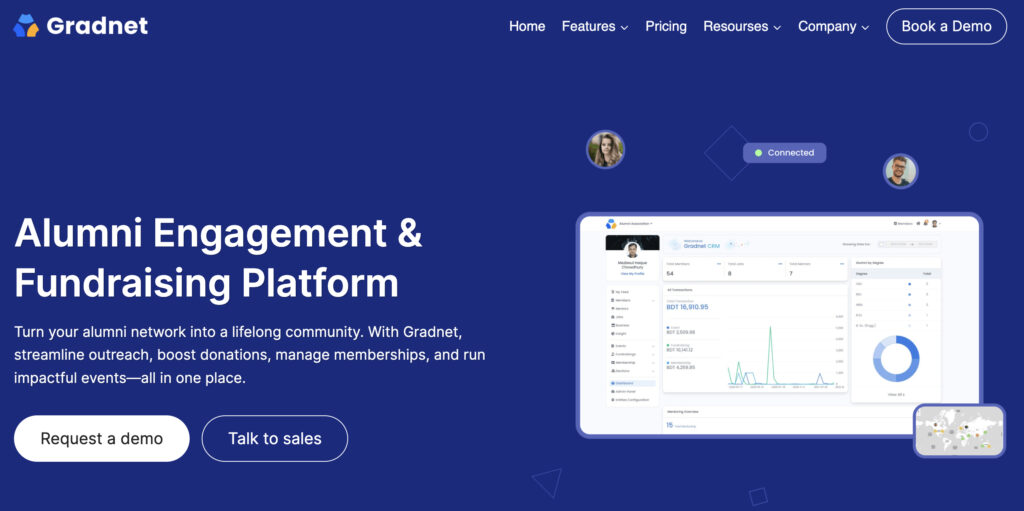
Gradnet is an effective alumni management system which integrates three functions, community building, fundraising and event management, all in one system. Universities, colleges and alumni associations all over the world trust it.
The software assists institutions to make their alumni networks vibrant communities because it provides communication tools, membership management and career guidance.
Using Gradnet, organizations will save time and money by substituting a number of tools with an integrated tool. Gradnet report indicates that the users of this system have been able to raise more than 5 million dollars in funds, sell more than 500K tickets, and hold more than 500 events.
Gradnet is also simple, safe, and scalable, which makes it applicable to both small associations and large institutions. It provides equilibrium of alumni participation by way of contemporary websites, direct mail messages, and mentoring.
Key Features
- CRM of alumni and searchable membership directory.
- Donor intelligence fundraising campaigns.
- E-ticket sale and management software.
- Individual surveys and polls.
- Dynamical alumni web site builder.
- Safety of online payment and international gateways.
- Electing alumni through the internet.
- Email center to use in targeted communication.
- Mentor-mentee matching programs.
- Efficiency through third party integration.
Best Use Cases
Gradnet is well-suited for universities, nonprofits, and alumni associations seeking to foster engagement, manage events, run fundraising campaigns, and oversee grant programs. Institutions have reported increased participation and donations, while minimizing administrative effort. Its intuitive design allows teams to adopt the system quickly without technical expertise.
Best For: Universities, nonprofits, and diaspora communities looking for a robust alumni CRM.
Customer Review: Gradnet has a 4.9 out of 5 stars on G2.
Learn more about Gradnet to see how it fits your alumni engagement strategy.
2. Almabase
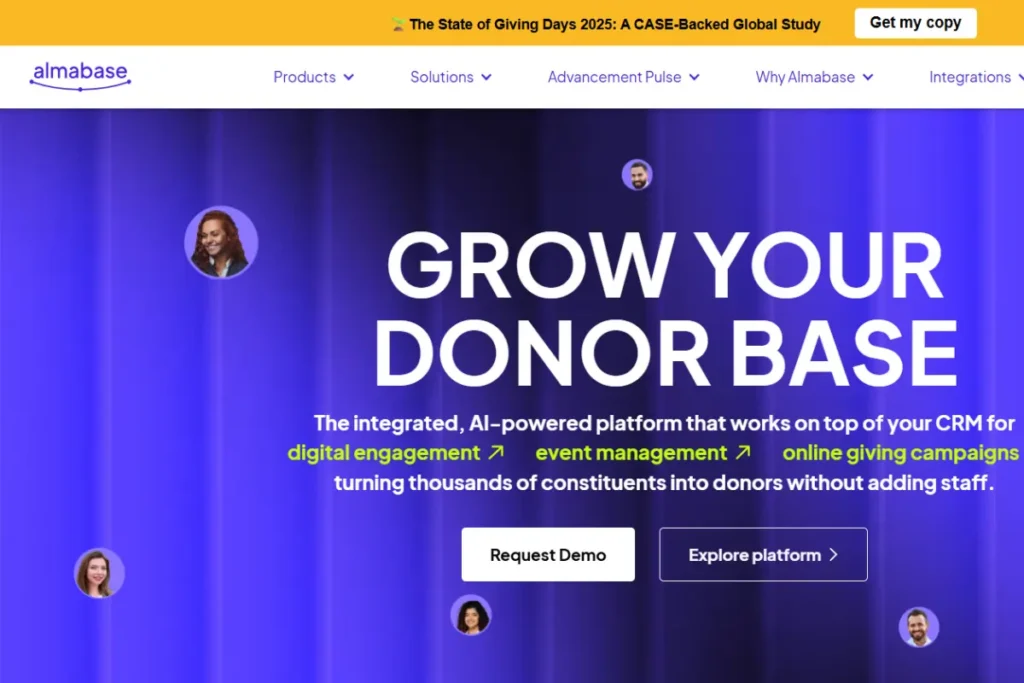
Almabase is the most popular transnational alumni management system with more than 500 educational advancement teams relying on it. It is integrated with existing CRMs to provide a flawless digital interaction, fundraising, and event management.
Almabase helps institutions to create stronger alumni communities, get more donations and give personalized communication.
Case studies indicate that Almabase has assisted universities in raising up to 45 percent donor engagement and up to three times the yearly donations, with automatization and a personalized outreach.
Having strong integrations, data security, and self-service, Almabase helps advance teams to achieve the utmost effect with minimal extra personnel.
Key Features
- Combined with CSRM such as Blackbaud Raise.
- Donor insight online giving campaigns.
- High-tech event management devices.
- Affinity groups and alumni directory.
- Mentorship programs and job boards.
- E-mail communication with branded mails.
- Live reporting and analytics.
- Safe data compliance (GDPR, SOC-2)
Best For: Large universities with advancement teams focused on donor engagement.
Customer Review: Almabase has a 4.7 out of 5 stars on Capterra.
3. Gravyty
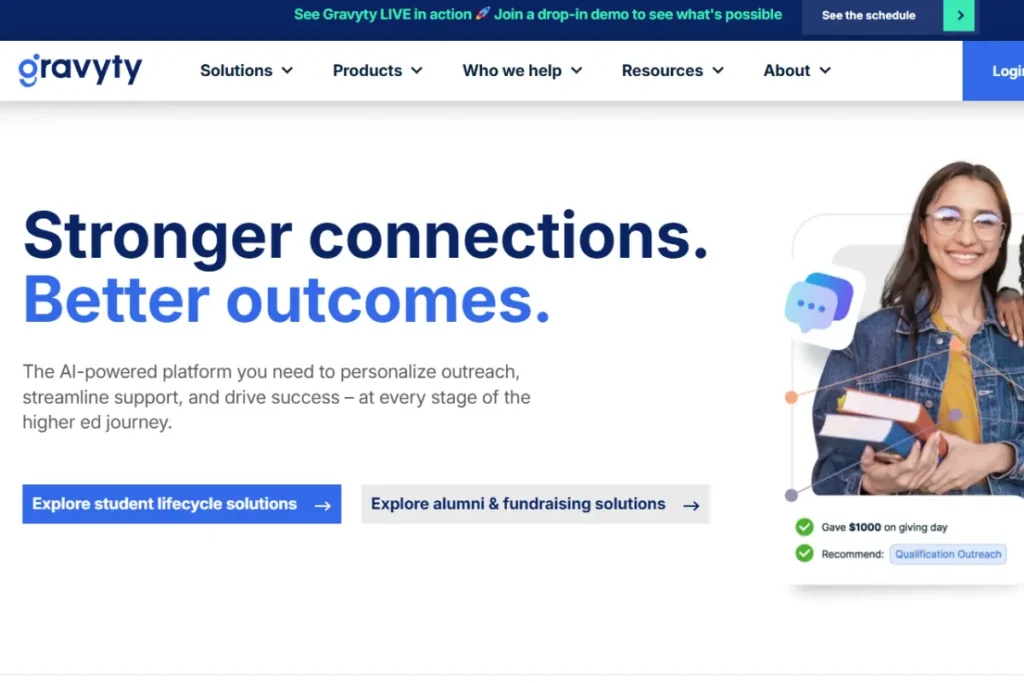
Gravyty is an AI-based alumni management platform that enhances higher education, nonprofit, and school engagement, fundraising, and donor relationships. It assists institutions to personalize contacting, computerize communication, and establish better alumni communities.
Gravyty is trusted by more than 2,700 institutions and integrates fundraising tools and virtual assistants with analytics to be able to achieve better results with less effort. It uses the platform to facilitate networking among the alumni, develop the growth of donor pipeline, and community future success.
Key Features
- AI-based outreach and engagement of donors.
- Automation of fundraising campaigns and knowledge of donors.
- Mentoring, networking tools of alumni.
- Individual video and email interaction.
- 24/7 support with 100+ language virtual assistant.
- Member and event management software.
- Safe connections with payment systems and CRM.
- Single point analytics and reporting.
Best For: Schools and nonprofits prioritizing AI-driven fundraising.
Customer Review: Gravyty has a 4.6 out of 5 stars on G2.
4. Hivebrite
Hivebrite is a very customizable alumni database and community engagement system and is used by universities, nonprofits and associations across the world. It assists institutions in developing branded online hubs, event management and enhancing alumni bonds.
Hivebrite promotes fundraising, mentoring, and networking, as well as provides powerful analytics to keep track of engagement. Hivebrite offers organizations a flexible structure and a secure infrastructure to create vibrant communities and create a long term impact.
Key Features
- Custom URL and mobile application alumni hubs.
- CRM and secure member directory applications.
- Ticketings and registrations of events.
- Donation tracking and fundraising campaigns.
- Mentoring and networking modules.
- Robotized communication and emailing campaigns.
- Complex analytics and reporting dashboards.
- Data privacy and data security that is compliant to GDPR.
Best For: Institutions needing highly customizable alumni networks.
Customer Review: Hivebrite has a 4.5 out of 5 stars on Capterra.
5. ToucanTech
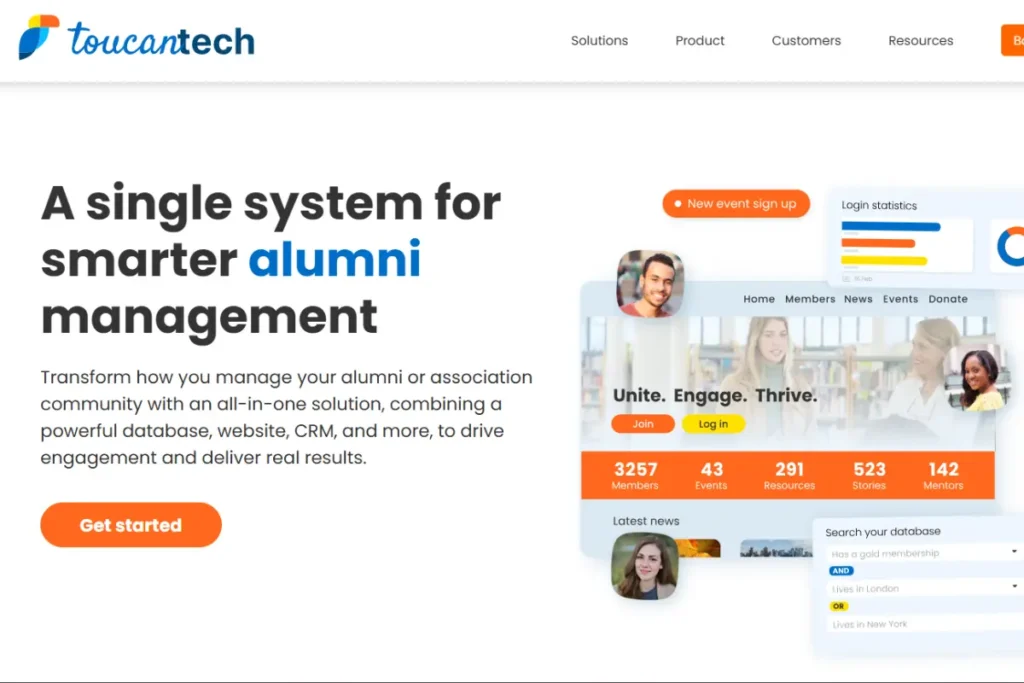
ToucanTech is a single-centered alumni management platform to use by schools, universities and membership-based organizations. It integrates an intense database, CRM, web site and communications within a single platform.
ToucanTech helps institutions save time, manage data on their alumni, and hold fundraising campaigns as well as establish better communities. Its enhanced ability to track participation and safe integrations assist organizations to expand subscriptions, enhance contributions, and provide long-term alumni achievement.
Key Features
- Alumni database and CRM are centralized.
- Member portals and custom branded websites.
- Ticketings and registrations of events.
- Online secured payment fundraising.
- Newsletters, emails, and communication tools are automated.
- Premium engagement tracking and reporting dashboards.
- Data privacy and data security that is compliant to GDPR.
- Onboarding support and dedicated customer support.
Best For: Schools and mid-sized institutions needing CRM and website management together.
Customer Review: ToucanTech has a 4.6 out of 5 stars on G2.
6. EverTrue
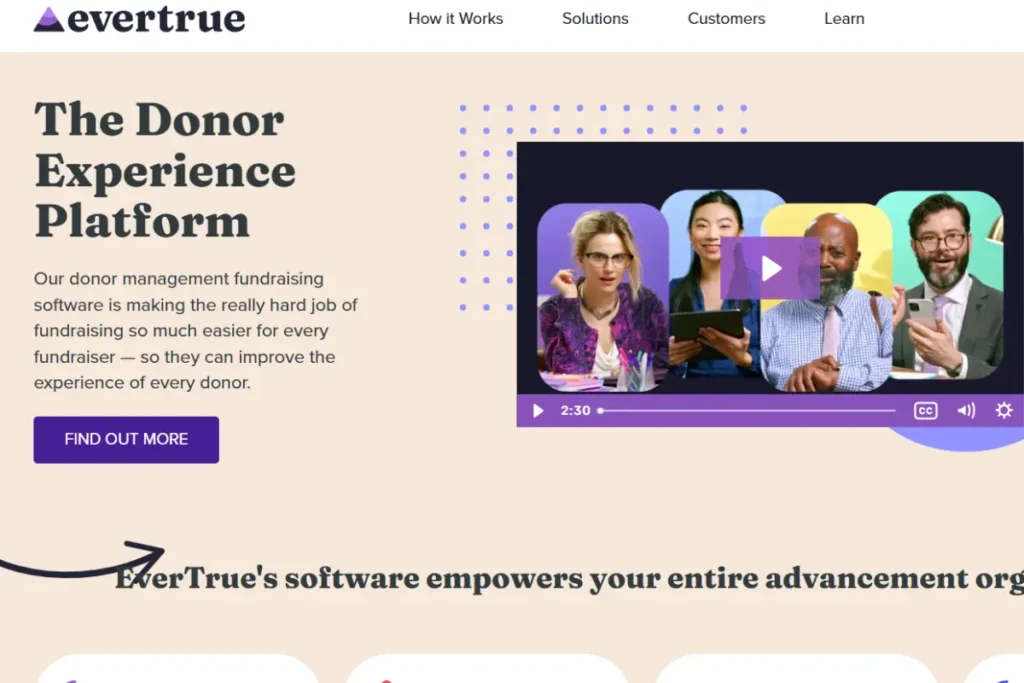
EverTrue is a new donor and alumni management software that is meant to assist universities and colleges as well as nonprofit organizations to build a stronger relationship with their donors and alumnus.
It applies modern insights and information, AI, and individual communication instruments to enhance fundraising results. EverTrue is trusted by thousands of advancement teams and enables them to easily find prospects, connect with alumni, and establish long-term relationships with donors and simplify campaigns and reporting.
Key Features
- Artificial intelligence-based donor intelligence and outreach.
- Discovery of prospects and generation of leads.
- Individual video, mail, text, and mail campaigns.
- Gift officer trip and event planning.
- Donor reporting dashboards Donor stewardship and reporting dashboards
- CRM and advancement system integration.
- Compliance and secure data handling.
Best For: Advancement teams focused on donor discovery and engagement.
Customer Review: EverTrue has a 4.7 out of 5 stars on Capterra.
7. PeopleGrove
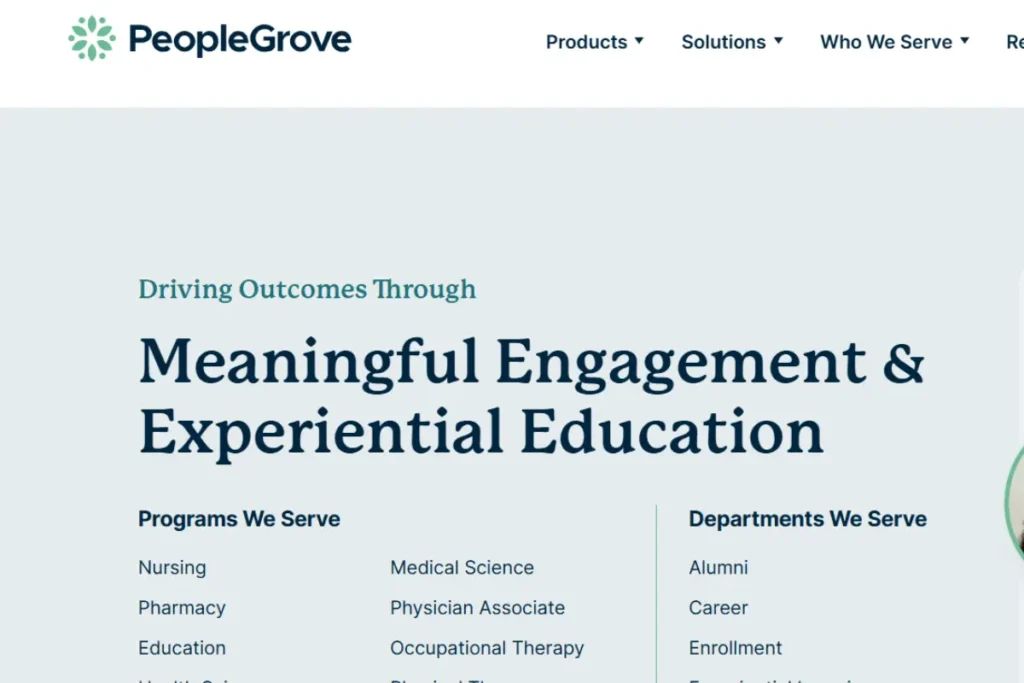
PeopleGrove is a complete system of alumni management, which unites students, alumni, and institutions with the help of mentorship, career development, and engagement software.
Relied upon by more than 500 institutions and employed by 20M+ users, it assists universities to enhance alumni engagement, fundraising, and student achievements. PeopleGrove facilitates meaningful relationship building that leads to long-term loyalty, career readiness and growth of institutions with AI-powered matching and secure integrations.
Key Features
- Student mentorship programs and alumni programs.
- Job boards and career networking.
- Tolls of fundraising and donor engagement.
- Community building and event management.
- Mentor-Mentee matching done by AI.
- Safe CRM and data compliance (GDPR-ready).
- Complex analytics and reporting dashboards.
- Assimilation into institutions.
Best For: Career networking and mentorship programs.
Customer Review: PeopleGrove has a 4.6 out of 5 stars on G2.
8. 360Alumni
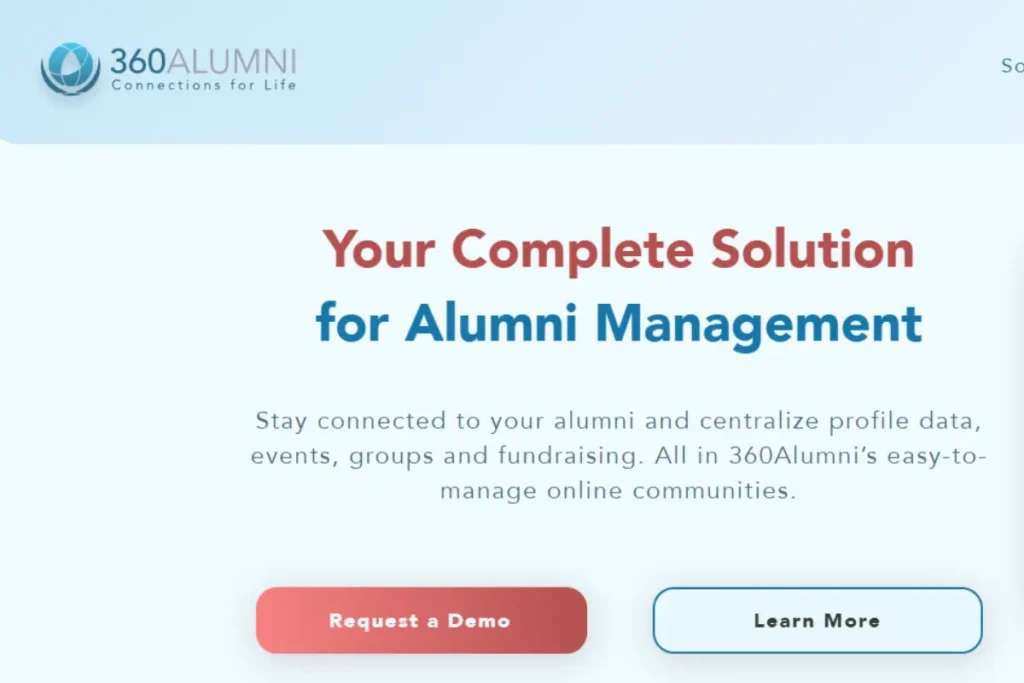
360Alumni is an alumni management platform that integrates cloud technology to enable institutions to create powerful alumni networks. It is a platform that integrates networking, fundraising and event management.
Graduates are involved in 360Alumni, which institutions use to raise funds, plan reunions or virtual events. It provides organizations with secure integrations and convenient-to-use tools that enable them to build on the relations with alumni and encourage their involvement and long-term growth.
Key Features
- Alumni directory and networking services.
- Donor-tracking Fundraising campaigns.
- Ticketing and registrations of events.
- Mentorship and career networking programs.
- Personal questionnaires and feedback.
- Secure CRM & data compliance
- Engagement insight analytics dashboards.
- Connection to payment gateways and CRMs.
Best For: Event-heavy alumni programs or reunion-focused institutions.
Customer Review: 360Alumni has a 4.5 out of 5 stars on Capterra.
9. Join It
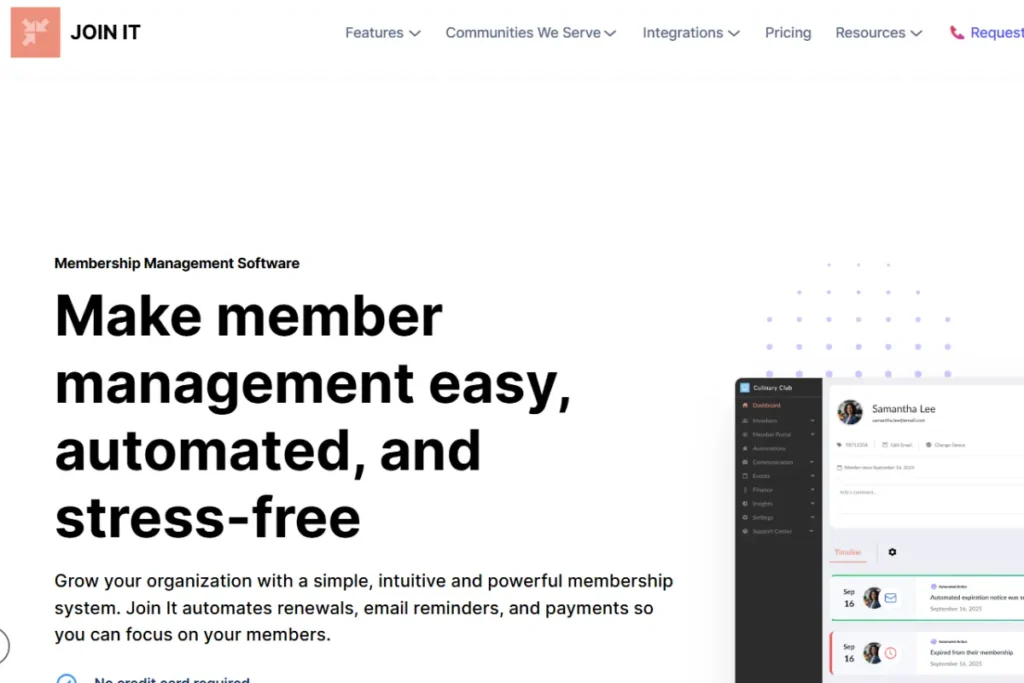
Join It is an easy and user-friendly membership and alumni management platform that has the trust of more than 4 thousand organizations across the world. It assists schools, nonprofits, and clubs to store alumni information, renew automatic, and improve communication.
Join It saves time and limits the number of manual operations with automatic CRM, event management, and online membership cards. It can easily expand communities, monitor payments, and enhance alumni participation because its secure integrations and real-time reporting are easy to use.
Key Features
- Centralized CRM of members and alumni.
- Automated payment, renewals and reminders.
- Smart membership cards (Apple Pay and Googgles Wallet).
- E-ticket sale and management software.
- Fields and memberships can be customized.
- Live data, insight and reporting displays.
- Mailchimp, Stripe, WordPress and Eventbrite integrations and others.
- Data security provided by GDPR.
Best For: Small alumni groups and associations needing simple management.
Customer Review: Join It has a 4.8 out of 5 stars on G2.
10. Wild Apricot
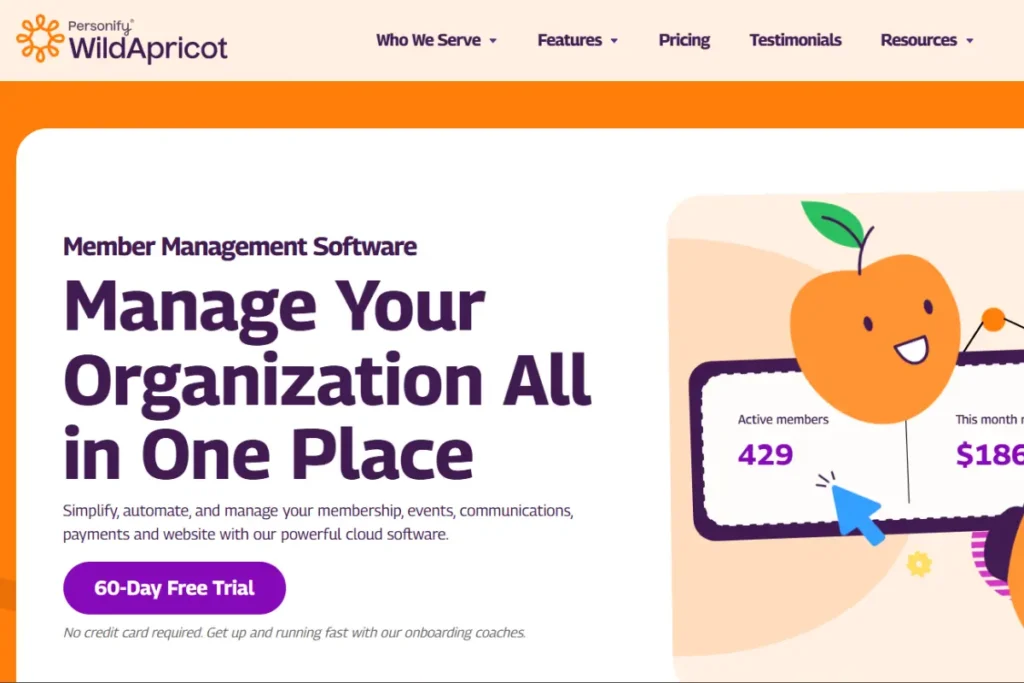
Wild Apricot is an online system used as a membership and alumni manager tool that is aimed at nonprofits, schools, and associations. It assists organizations to maintain databases of alumni, automate renewals and streamline registration of events.
Wild apricot eases alumni engagement since it has inbuilt website facility, secure payment, and communication tools. It is relied on by thousands of organizations as an affordable and flexible tool in growing communities and enhancing the relationships between alumni.
Key Features
- Eastern database system is a centralized database of alumni and members.
- Automated payments and renewals.
- Online ticketing and event registration applications.
- Web page construction tool that has customizable templates.
- Email marketing and communications centre.
- Member and member-admin mobile app.
- Reporting and analytics dashboard.
- Definitive data observance and integrations.
Best For: Small nonprofits, associations, and educational institutions.
Customer Review: Wild Apricot has a 4.5 out of 5 stars on Capterra.
How to Choose the Right Alumni Management Software?
Choosing the right Alumni Management Software in 2026 is a strategic decision for schools, colleges, and universities. The right platform can improve alumni engagement, increase donations, and strengthen community ties.
With the alumni software market growing at nearly 9% annually, institutions must carefully evaluate their needs, features, and long-term value before investing.
1. Define Your Organization’s Needs
The first step is to identify your goals. Consider the size of your alumni network and how much data needs to be managed. Larger institutions require scalable solutions, while smaller ones may prefer simpler tools.
Define your engagement goals clearly—whether you want to focus on fundraising, career networking, or event participation. Research shows that 60% of alumni value career services as their main reason to stay connected.
2. Evaluate Features & Usability
Look for platforms with a centralized database, communication tools, event management, fundraising features, and analytics.
Ease of use is critical. Reports show that institutions with user-friendly platforms see 40% higher alumni participation in events compared to complex systems. Both administrators and alumni should find the software simple and intuitive.
3. Pricing & Budget Considerations
Compare subscription vs. custom pricing models. Subscription plans are predictable, while custom pricing may suit larger institutions. Watch for hidden costs such as setup fees, training, or upgrades. Transparent pricing ensures sustainability.
4. Data Security & Compliance
Alumni data must be protected. Choose software that meets privacy standards like GDPR or local compliance rules. Ensure secure data handling with encryption and regular audits to build alumni trust.
5. Support, Onboarding & Scalability
Strong training and customer support are essential for smooth adoption. Institutions should also consider long-term growth, ensuring the platform can scale as alumni numbers increase.
Alumni Management Software Use Cases
Alumni Management Software is widely used across different types of institutions to strengthen relationships with graduates and members.
In 2026, it has become a vital tool for engagement, fundraising, and community building.
The global alumni software market is growing at nearly 9% annually, showing its increasing importance in education and nonprofit sectors.
Universities & Colleges
Networking
Universities use alumni platforms to create professional networks. Graduates can connect with peers, mentors, and industry leaders. Surveys show that 60% of alumni value networking opportunities as their main reason to stay engaged.
Example: A university used Gradnet to run an online mentorship program, connecting 500 alumni with students. Within six months, 120 students secured internships.
Career Support
Career services are integrated into alumni software with job boards and mentorship programs. This helps students and graduates find opportunities and strengthens institutional reputation.
Example: A business school posted exclusive job openings on its alumni platform, resulting in over 200 applications in two weeks.
Fundraising
Alumni donations contribute 25–30% of total fundraising revenue in many universities. Software tools track donor behavior, automate campaigns, and increase participation rates.
Example: One university increased online donations by 28% using targeted campaigns through its alumni platform..
Schools & Educational Institutions
Community Building
Schools use alumni platforms to build lifelong communities. Alumni can share achievements, attend reunions, and support current students. This fosters pride and belonging.
Example: A high school hosted a virtual reunion using alumni software, raising participation from 40% to 70%.
Parent-Alumni Engagement
Some platforms also connect parents with alumni networks. This strengthens ties between families and institutions, encouraging future support.
Example: A private school created parent-alumni networking groups, leading to additional sponsorships and volunteers.
Associations & Nonprofits
Membership Growth
Associations use alumni-style software to manage member directories and engagement campaigns. This helps grow membership bases and retain existing members.
Example: A professional association automated member renewals using an alumni platform, increasing retention by 25%.
Donations & Events
Nonprofits benefit from fundraising tools and event management features. Reports show that digital platforms increase event participation by 40% compared to traditional methods.
Example: A nonprofit held a virtual charity gala using its platform, selling 500 tickets and raising 30% more donations than the previous in-person event.
Best Practices for Implementing Alumni Management Software
Implementing Alumni Management Software is an important step for institutions that want to strengthen alumni relationships. A proper plan ensures smooth adoption, better engagement, and long-term success. The following guide explains the key steps in simple terms.
Step 1: Define Objectives
Start by identifying your goals. Decide whether you want to focus on communication, fundraising, event management, or networking. Clear objectives help you choose the right features and measure success later.
Step 2: Select the Right Software
Evaluate different alumni platforms based on features, cost, ease of use, and scalability. Consider feedback from staff and alumni before making a final choice. Choose software that matches your institution’s size and needs.
Step 3: Prepare Data
Gather alumni information such as names, emails, phone numbers, and career details. Clean the data to remove duplicates or outdated records. Organized data ensures smooth migration into the new system.
Step 4: Train Staff and Users
Provide training sessions for administrators and staff. Show them how to manage data, send communications, and organize events. Offer simple guides or tutorials for alumni so they can use the system easily.
Step 5: Launch in Phases
Start with a small group of alumni to test the system. Collect feedback and fix issues before expanding to the entire alumni community. A phased launch reduces risks and builds confidence.
Step 6: Promote Engagement
Encourage alumni to register, update their profiles, and join events. Use newsletters, social media, and personalized messages to increase participation. Highlight success stories to motivate others.
Step 7: Monitor and Improve
Use reports and analytics to track engagement, fundraising, and event participation. Review results regularly and adjust strategies to improve outcomes. Continuous monitoring ensures long-term success.
Future Trends in Alumni Management 2026
Alumni management is changing quickly with the help of technology and new engagement strategies. Institutions are looking for smarter ways to connect with their past students, build stronger communities, and encourage long-term support. The future will focus on personalization, digital tools, and meaningful experiences.
Increased Use of Technology
Alumni management will rely heavily on advanced software, cloud solutions, and mobile apps. The global alumni management software market is rapidly growing, projected to nearly double from about USD 991 million in 2025 to nearly USD 1.96 billion by 2032 at a nearly 9% CAGR, as institutions adopt digital tools to engage alumni more effectively.
AI-Driven Fundraising
Artificial intelligence will play a bigger role in fundraising and donor management. Automation will let institutions send personalized messages, manage events, and track donations with less manual work. Artificial intelligence (AI) will analyze alumni behavior, helping predict engagement patterns and tailor outreach, making campaigns more relevant and effective.
Example: One institution used AI-powered donation insights to target potential major donors, resulting in a 25% increase in high-value contributions. Institutions that adopt these tools gain a strategic advantage in fundraising.
Virtual and Hybrid Events
Future alumni events will combine physical and online participation. Virtual reunions, webinars, and networking sessions will allow alumni from different countries to join easily. Hybrid models will make events more inclusive and accessible.
Personalized Engagement
Alumni expect communication that matches their interests and careers. Institutions will use data to send tailored updates, job opportunities, and event invitations. Personalized engagement will make alumni feel valued and connected.
Example: A university recommended mentorship opportunities to alumni using predictive analytics, increasing participation in programs by 35%. Personalized engagement helps build loyalty and keeps alumni actively involved.
Stronger Networking Platforms
Future alumni management will focus on building professional networks. Online communities, mentorship programs, and job boards will help alumni connect with each other and support current students.
Focus on Fundraising Transparency
Donations will remain important, but institutions will show alumni exactly how their contributions are used. Transparent reporting and impact stories will build trust and encourage more support.
Global Connections
With alumni spread across the world, institutions will use digital platforms to maintain global networks. This will strengthen international collaboration and open new opportunities for alumni and students.
Conclusion
This Alumni Management Software Guide reveals how universities can develop a healthy relationship with their alumni.
With the help of the appropriate software, schools, colleges, and universities can enhance communication, plan events, and easily control fundraising. Networking and mentorship opportunities are also available to the alumni.
The process is easy and efficient with secure data management and effective reports. A proper selection of a tool guarantees long-term involvement and success.
Through this guide, institutions are in a position to develop a nurturing alumni community that remains to grow and make a contribution to future success.
Ready to Move Forward?
If you’re exploring alumni management platforms that combine engagement, events, and fundraising in one system, Gradnet is a practical option to consider. It supports universities and nonprofits looking for measurable participation and sustainable growth. To see how it aligns with your goals and workflows, book a free demo and explore the platform in action.
Best of luck with your selection—choosing the right platform is a strong step toward long-term alumni success.
FAQs
Who Uses Alumni Management Software?
Educational institutions, training institutes, nonprofits, and membership organizations use alumni management software to stay connected with former members and build long-term engagement.
How Does It Help With Alumni Engagement?
The software enables newsletters, social updates, event invitations, discussion forums, and networking tools that keep alumni informed and active in the community.
Is Alumni Management Software Secure?
Reputable systems use encryption, access control, and data privacy measures to protect alumni information.
Can Alumni Management Software Support Fundraising Efforts?
Yes. It manages donation campaigns, donor tracking, pledge management, and reporting to improve fundraising transparency and success.
Does The Software Include Event Management Tools?
Most platforms offer tools for planning reunions, meetups, webinars, and virtual events, including registration, ticketing, reminders, and attendance tracking.
A Smarter Way to Build Community
Gradnet centralizes everything—members, events, and fundraising—so your community can grow effortlessly.