

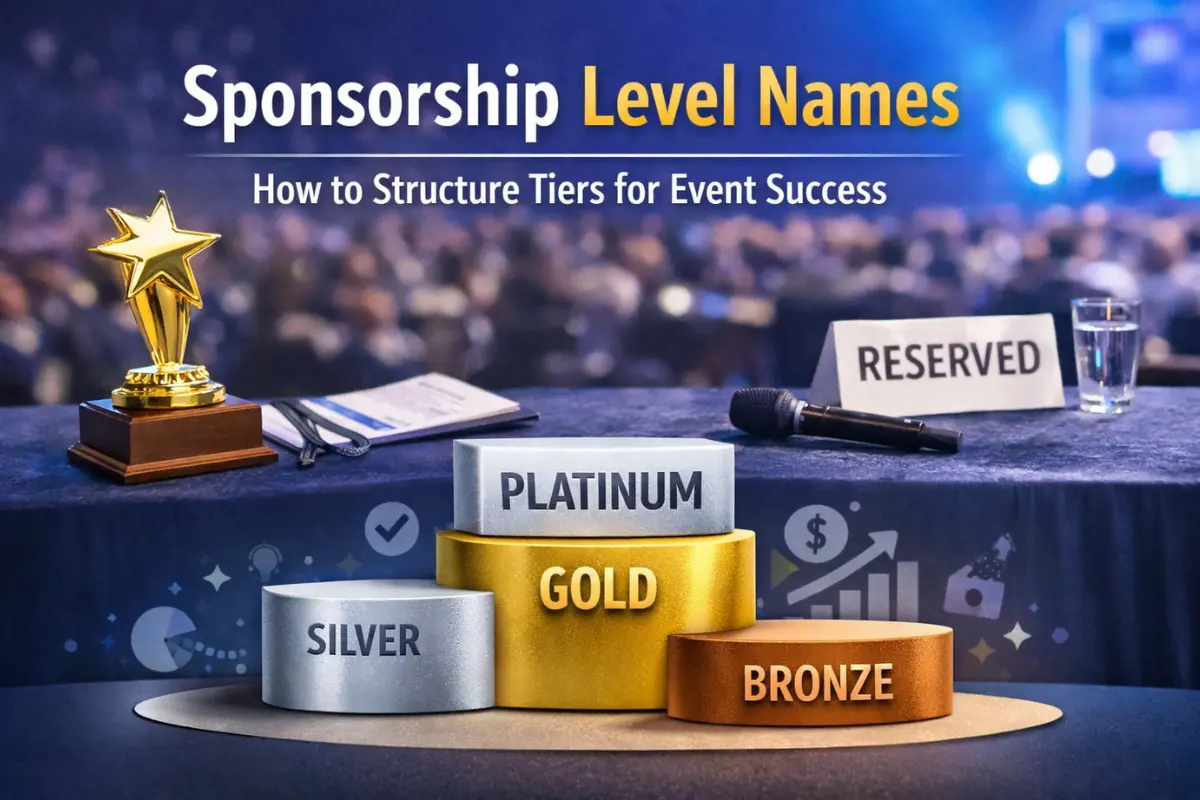
Sponsorship Level Names That Boost Event Engagement
Clear sponsorship level names improve engagement, communicate benefits, and increase conversions. Learn how to structure tiers for your event.

Pabel Khan
Digital Marketer
Sponsorship level names define how sponsors are categorized based on contribution and benefits.
Clear, well-structured names help organizers communicate value, signal prestige, and guide pricing decisions.
Choosing the right names can increase sponsor engagement, improve conversion rates, and make your event appear professional.
Effective naming also ensures sponsors feel recognized, understand their benefits, and are more likely to invest in higher tiers.
This guide shows how to choose sponsorship level names that work in real-world events.
What Are Sponsorship Level Names?
Sponsorship level names are the labels given to different tiers in a sponsorship program.
They do more than identify price points—they communicate the value and type of access a sponsor will receive.
In practice, sponsors interpret the tier name before reviewing the benefits or cost.
This influences their perception of exclusivity, impact, and return on investment.

Many programs make the mistake of using generic names like Gold, Silver, or Bronze.
While simple, these names often fail to signal strategic value, especially in alumni or community-based partnerships.
For example, a “Gold Sponsor” may imply only visibility, whereas a “Strategic Partner” conveys influence, collaboration, and long-term engagement.
Why Tier Names Matter?
In real-world scenarios, sponsors often prioritize clarity of impact over price. Alumni networks that updated their top-tier names from generic metals to access- or outcome-based labels saw higher top-tier adoption without changing benefits.
This demonstrates that tier naming can directly affect revenue and sponsor commitment.
Decision Framework for Naming
To maximize effectiveness:
- Align names with sponsor motivation (visibility, access, or outcomes).
- Limit tiers to 4–5 to avoid confusion.
- Name tiers after the promise delivered, not just a monetary value.
Clear, well-framed tier names reduce negotiation time, increase renewals, and signal real program value, especially for organizations managing multiple sponsorships at scale.
Common Sponsorship Level Naming Frameworks
Choosing the right sponsorship level names is more than a naming exercise. It shapes how sponsors perceive value, compare tiers, and decide where to invest.
Names influence prestige, ROI perception, and conversion rates. Poor naming can confuse sponsors or reduce participation.
Traditional Hierarchy-Based Names
The most common approach uses clear hierarchies like Platinum, Gold, Silver, and Bronze.
These names signal prestige instantly, making it easy for sponsors to understand where they stand. In practice, organizers see faster decisions and higher sign-ups with this approach.
The trade-off is that it can feel generic, and sponsors may focus more on status than actual benefits.
Gradnet works well here by helping medium-to-large events structure tiers clearly and communicate benefits without overcomplicating the hierarchy.
Value-Based Sponsorship Level Names
Some events use tier names tied to specific outcomes, such as Visibility, Engagement, or Exclusive Access.
Sponsors connect the level to measurable value rather than abstract prestige.
The challenge is ensuring that the perceived value matches the price—otherwise sponsors feel shortchanged.
Gradnet helps by mapping benefits to each tier, making ROI transparent and motivating sponsors to invest in higher levels.
Thematic or Event-Branded Names
Event-branded names like Innovator, Pioneer, or Visionary strengthen brand identity and make sponsorship feel part of the experience.
Real-world constraint: the hierarchy must remain clear; otherwise, sponsors can get confused about which tier offers the most value.
Gradnet allows organizers to align branded tiers with concrete benefits, keeping clarity and prestige intact.
Creative Tier Naming (Gamified or Story-Driven)
Gamified names like Explorer, Challenger, Champion make sponsorship memorable and engaging.
The main trade-off is that creative names can overshadow clarity if benefits aren’t obvious.
Using Gradnet, event organizers can tie each creative tier to specific perks, ensuring sponsors understand both the experience and the value.
Tips: Choosing a framework requires weighing your audience, event size, and goals.
Gradnet is ideal for organizers who want flexible, structured, and visually clear sponsorship tiers that communicate value, status, and engagement effectively.
How to Choose the Right Sponsorship Level Names?
Choosing the right sponsorship level names is a strategic decision.
Names influence how sponsors perceive value, access, and exclusivity.
Well-structured names improve top-tier adoption, engagement, and renewals. They should clearly communicate what sponsors gain, not just their cost.
Key Considerations for Naming
When selecting tier names, consider:
- Brand Alignment: Names should reflect your organization’s identity and values.
- Sponsor Audience Sophistication: Corporate partners respond better to value- or outcome-based names, while smaller or community sponsors may prefer familiar hierarchical labels.
- Ticket Price and Sponsorship Value: Higher-value tiers require names that signal exclusivity and strategic benefit.
- Sales Team Usability: Names should be intuitive for staff to explain and promote to potential sponsors.
Mini Decision Matrix
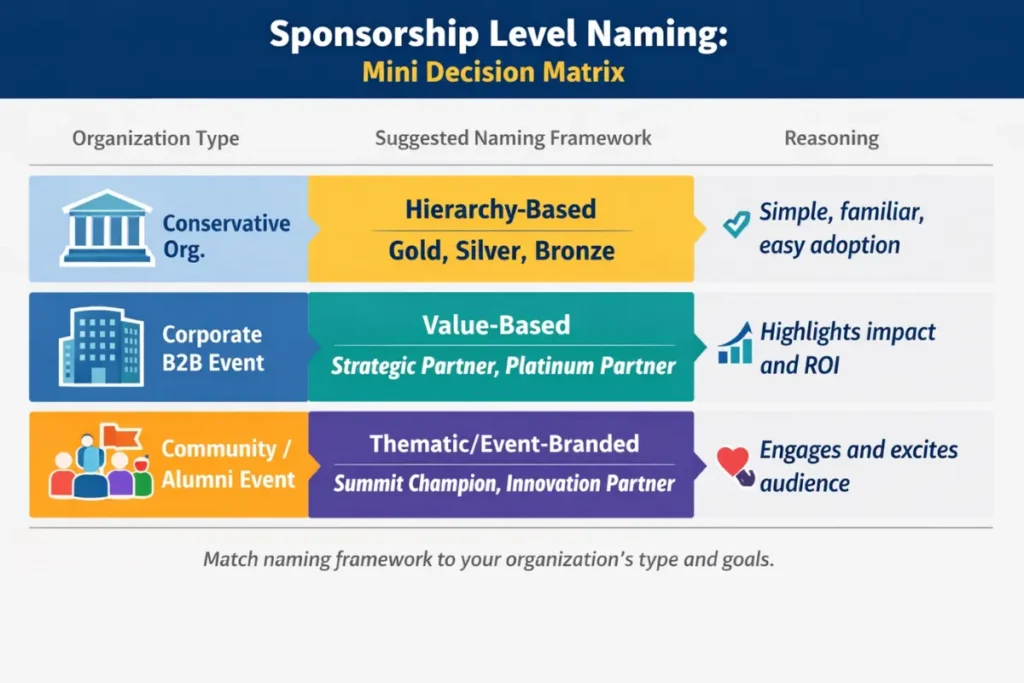
This framework ensures your sponsorship levels match sponsor expectations and program goals.
For mid-to-large alumni networks or professional communities, Gradnethelps organizations create tier structures that reflect real engagement. It allows teams to:
- Track sponsor interactions
- Segment benefits by tier
- Align naming with measurable outcomes
Common Mistakes with Sponsorship Level Names
Sponsorship level names are more than labels. They influence how sponsors perceive value, prestige, and professionalism.
Choosing names poorly can reduce interest, confuse sponsors, or make levels feel meaningless.
1. Using Generic or Confusing Names
Many events use vague names like Tier 1, Tier 2, or Basic. These fail to signal value or hierarchy. Sponsors respond better to clear, recognizable, or themed names such as Platinum, Gold, or creative event-specific labels.
2. Overloading Benefits Without a Clear Hierarchy
Some organizers list too many perks across tiers without showing differences. If sponsors can’t easily see why one tier costs more, they may choose lower levels or skip participation.
3. Ignoring Psychological Impact
Sponsors often choose based on prestige, not just benefits. Names that feel low-value or unclear can reduce conversion rates.
Highlighting status and exclusivity through thoughtful naming encourages higher engagement.
4. Skipping Real-World Testing
Assuming names work without testing is risky. Reviewing previous events or asking past sponsors what appeals to them helps ensure your tiers feel meaningful and attractive.
Sponsorship Level Names for Different Use Cases
Sponsorship level names are more effective when they match the context of your event.
Generic names can confuse sponsors or fail to communicate value. Thoughtful naming improves clarity, perception, and engagement.
| Event Type | Example Tier Names | Why It Works | Trade-offs / Considerations |
| Corporate / Professional | Platinum, Gold, Silver, Bronze | Clear hierarchy signals prestige and justifies pricing | Can feel rigid; may not suit informal events |
| Fundraising / Alumni | Founder’s Circle, Leadership Circle, Supporter | Emphasizes recognition and status; encourages larger contributions | Must ensure smaller tiers still feel valued |
| Sports / Entertainment | MVP, All-Star, Rookie | Thematic, fun, and engaging; appeals to active or youth-focused sponsors | May feel less professional to corporate sponsors |
| Small Community / Local | Champion, Partner, Friend | Inclusive, simple, and approachable; all sponsors feel appreciated | Lacks the prestige signaling of formal names |
| Tech / Innovation Events | Innovator, Leader, Supporter | Aligns with audience expectations; highlights contribution levels clearly | Creative names may confuse outside stakeholders if not explained |
How Sponsorship Level Names Connect to Benefits and Pricing?
Sponsorship level names are more than labels. They guide how sponsors perceive benefits and pricing. Clear, well-thought-out names communicate hierarchy, prestige, and what sponsors can expect in return.

Connecting Names to Benefits
Sponsors often associate higher-tier names with more exclusive benefits. For example, a Platinum tier might include stage mentions, premium logo placement, and social media highlights.
A Gold tier could offer website recognition and event signage. Naming tiers strategically makes it easier for sponsors to see the difference between levels and understand their value.
Impact on Pricing and Decisions
Real-world events show that sponsors sometimes choose tiers based on perceived prestige rather than just benefits.
In many alumni events, the biggest challenge isn’t engagement—it’s outdated contact data.
Names like Founder’s Circle or Leadership Circle signal status, encouraging higher contributions even if the actual benefits are similar to mid-tier levels.
Practical Takeaways
Effective tier names improve clarity, guide sponsor decisions, and justify pricing.
Testing names, differentiating tiers clearly, and aligning them with the event theme ensures sponsors feel recognized and more willing to invest.
Final Words
Choosing the right sponsorship level names is critical for event success. Clear, well-structured names improve sponsor perception, communicate benefits, and guide pricing decisions. Real-world events show that names influence prestige, engagement, and conversion rates.
Thoughtful tier naming avoids confusion, highlights value, and ensures all sponsors feel recognized.
For medium-to-large organizations or alumni teams, using a platform like Gradnet can simplify tier management, track contributions, and centralize event data.
To see how it works in practice, book a demowith Gradnet and explore how structured sponsorship management can elevate your next event.
FAQs
Why Do Sponsorship Level Names Matter For Engagement?
Clear and meaningful names signal prestige and value. Sponsors understand benefits better, feel recognized, and are more likely to participate or upgrade to higher tiers.
Can Small Events Use The Same Tier Names As Large Events?
Yes, but adjust names for context. Small events benefit from approachable names like Champion, Partner, Friend, while large events can use formal tiers like Platinum or Gold.
How Can I Test If Sponsorship Names Work?
Survey past sponsors or run A/B tests with sample names. Real feedback ensures names communicate value, hierarchy, and appeal before launching sponsorship offers.
Should Benefits Match The Tier Name Exactly?
Yes, benefits should reflect perceived value. A Platinum sponsor should receive more exclusive perks than a Silver sponsor, maintaining credibility and motivating higher contributions.
Are Themed Names Effective?
Themed names work for sports, entertainment, or fundraising events. Examples: MVP, All-Star, Rookie or Founder’s Circle. They make sponsorship engaging while maintaining hierarchy.
Do Tier Names Influence Sponsor Perception?
Absolutely. Strong names convey professionalism and prestige. Vague or generic names may reduce credibility and cause sponsors to undervalue their contribution.
How Many Words Should A Sponsorship Tier Name Have?
Keep names short and clear, ideally 1–3 words. This makes them memorable, easy to communicate, and visually effective in promotional materials.
A Smarter Way to Build Community
Gradnet centralizes everything—members, events, and fundraising—so your community can grow effortlessly.