

Best School Fundraising Software in 2026

Dabarshi Roy
Business Development Associate
Choosing the right fundraising platform for your school can be harder than it looks. Some platforms are built for quick, one-time campaigns, while others are designed to help schools manage donors and alumni relationships year after year.
The difference matters. A PTA running a walk-a-thon has very different needs from an alumni association building a long-term fundraising program.
To help you choose, here’s how six of the best school fundraising software options compare on features, pricing, and best-fit use cases.
6 Best School Fundraising Platforms at a Glance
Not every school needs the same type of fundraising software. The platforms below cover different use cases, from one-time athletic campaigns and school events to ongoing alumni fundraising.
| Platform | Best For | Pricing |
|---|---|---|
| Gradnet | Alumni engagement + year-round fundraising | Starts at $99/month |
| AlmaShines | University advancement + CRM integrations | Starts at $120/month |
| GiveCampus | Private schools + higher-ed fundraising | Custom pricing |
| Snap!Raise | Athletic teams + activity campaigns | No upfront cost; schools typically keep 80%+ |
| OneCause | Auctions, galas + fundraising events | Starts at $200 + 5% Pay-As-You-Go |
| Givebacks | PTAs, booster clubs + school districts | Starts at $499/year |
Quick take: If you need a platform for a single campaign, a specialized fundraising tool may be the better choice. If fundraising is part of a broader alumni engagement strategy, a platform that connects fundraising with your member data, events, and community can offer more long-term value.
What Should Schools Look for in a Fundraising Platform
Six things separate a platform that fits from one you’ll regret in six months. Run any option on this list through these before you sign up.
Fee Transparency
The real cost is platform fee plus payment processing – the two are often quoted separately, or not quoted at all.
- Some platforms cap their fees; others are open-ended percentages of whatever you raise
- “Starting at” or “contact us for pricing” isn’t a red flag on its own – it’s a signal to ask for the full breakdown in writing before you commit
- Compare the all-in cost, not the headline rate
CRM/Donor Data Depth
A one-off donation page and a real donor CRM look similar on the surface but behave very differently over time.
- Does the platform remember a donor after their first gift?
- Can you segment donors and track engagement history over time?
- Can you see who your most consistent givers are, at a glance?
If your fundraising is meant to build lasting relationships – not just process a single transaction – this is the criterion that matters most.
Event & Community Engagement Tools
Fundraising rarely happens in isolation. The strongest platforms pair donations with events, communications, and networking – not just a checkout button.
- Event ticketing bundled with fundraising, not a separate tool
- A member/donor directory that shares data with the fundraising module
- Communication tools (newsfeed, email) built in rather than stitched together from separate vendors
Mobile-Friendly Experience
Most donors give from their phones. A donation flow that’s clunky on mobile – too many steps, slow load times, no digital wallet support – loses donors before they complete the gift.
- Test the actual giving page on a phone, not just the marketing screenshots
- Look for Apple Pay / Google Pay support and a short checkout flow
- Check event registration and ticketing on mobile too, not just donations
Security & Compliance
Schools and alumni associations handle sensitive donor and member data. At minimum, look for:
- PCI-DSS compliant payment processing
- SSL encryption
- COPPA/FERPA-aware data handling (K-12 specifically)
- Identity verification and auditability, if the platform includes elections or voting
Support
Many school and alumni fundraising efforts are run by volunteers or small teams without dedicated IT support – so response time matters when something breaks mid-campaign.
- Is support available by phone, or only ticket/email?
- What’s the typical resolution time?
- Real answers vary a lot here – some vendors resolve issues in hours, others take days
The 6 Best School Fundraising Software
Here’s how each platform stacks up – what it does best, what it costs, and where it falls short – so you can match it against your school’s actual fundraising needs.
1. Gradnet: Best for Ongoing Alumni Engagement + Fundraising
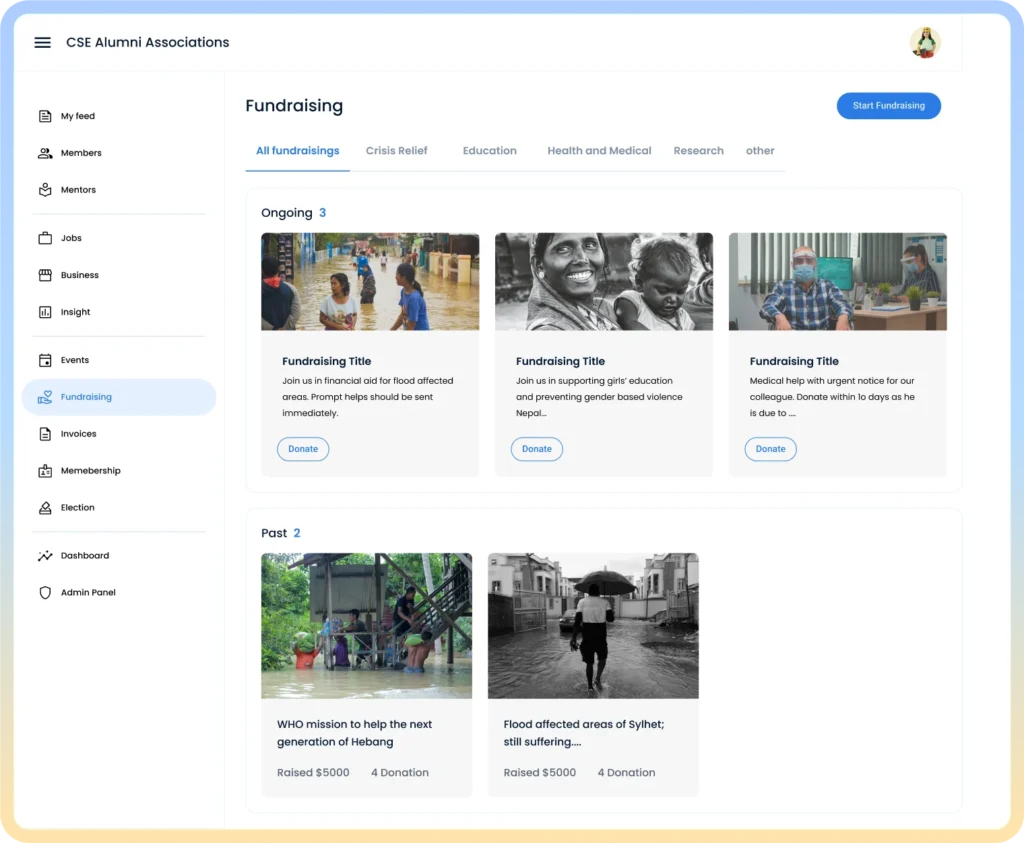
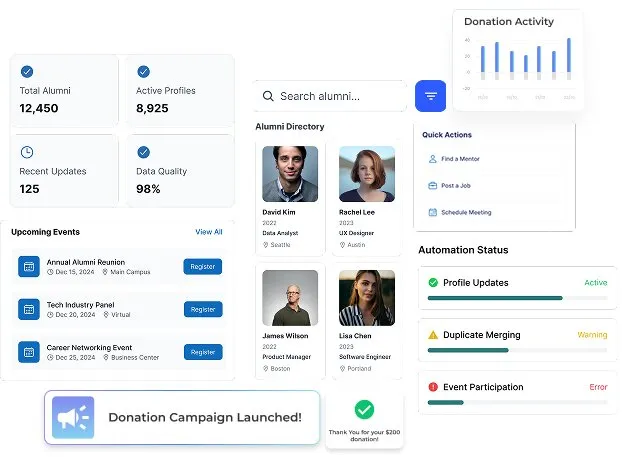
Gradnet takes a different approach to school fundraising. Instead of treating fundraising as a standalone campaign, it connects giving with the wider alumni community. Your member directory, events, fundraising activity, mentoring programs, job board, and other engagement activities can live within the same platform.
That makes the platform particularly useful for schools and alumni associations that want to build relationships over time. An alumnus can discover an event, stay connected through the community, and later contribute to a fundraising campaign without the organization having to manage those activities across separate systems.
If your main goal is to launch a single fundraiser as quickly as possible, a specialized campaign platform may be simpler. But for organizations looking to turn alumni engagement into long-term giving, Gradnet’s connected approach is its biggest advantage.
Key Features:
- Fundraising campaigns. Set a goal, launch a campaign page, and track donations as they come in. Donors can give anonymously, and the platform keeps a record of who your top and repeat donors are.
- Member directory. Alumni can be searched by name, degree, or location, with an approval step so only verified members join. A map view shows where alumni are based around the world.
- Event ticketing. Create events with multiple ticket types, manage the guest list, and see attendance and revenue data after the event ends.
- Mentoring program. Match students or recent graduates with alumni mentors, set discussion topics, and track how each relationship is progressing.
- Job board. Alumni can post openings that current students and graduates can apply to directly, with a built-in tool to help students put together a resume.
- Online voting. Run elections with anonymous ballots and identity checks, and get results instantly once voting closes.
- Branded website and community feed. Every plan includes a website for the association and a feed where members can post updates and share news.
Pricing:
- Starts at $99/mo, scaling by number of members
- Enterprise self-hosted plans from $8,000/year, for organizations wanting full control of their own infrastructure
Pros and Cons:
User Feedback:
👍
Suranjana Jennifer R.
“GRADNET is more than just a platform; it’s a powerful tool that connects graduates and industry professionals, creating endless possibilities for collaboration and growth. As I explore its user-friendly interface and robust resources, I can’t help but feel a renewed sense of hope for the future of networking and professional development.”
G2 Review
2. AlmaShines: Best for University Advancement Teams Needing CRM Integrations
AlmaShines focuses on helping schools run structured fundraising campaigns, particularly giving days and peer-to-peer campaigns. Its mobile-first giving experience, live leaderboards, and donor fund visibility make it easier to engage supporters and show campaign progress.
It also integrates with systems such as Salesforce and Blackbaud Raiser’s Edge, making it a practical option for institutions that already have an established advancement stack.
Key Features:
- Native two-way sync with Blackbaud Raiser’s Edge and Salesforce
- Donor fund visibility – donors see exactly which scholarship or project their gift supports
- Mobile-first giving days with peer-to-peer leaderboards
- Alumni directory, job board, and mentorship (Pro tier and above)
- Digital alumni ID cards and business directory (Advanced tier)
Pricing:
Tiered and genuinely transparent.
- Booster – $120/mo, up to 3,000 members, no fundraising module
- Pro – $240/mo, unlimited members, adds mentorship and fundraising
- Advanced – $360/mo, adds digital ID cards and business directory
- Enterprise – from $8,000/yr, for 5+ institutes, includes private cloud and lifetime access
Pros and Cons:
User Feedback:
👍
Ritu R.
“It helps us stay connected with the student community, including both our seniors and juniors, and makes it easier to network with them. It also helps us share and access both professional and community engagements.”
G2 Review
3. GiveCampus: Best for Private Schools & Higher Ed With Bigger Budgets
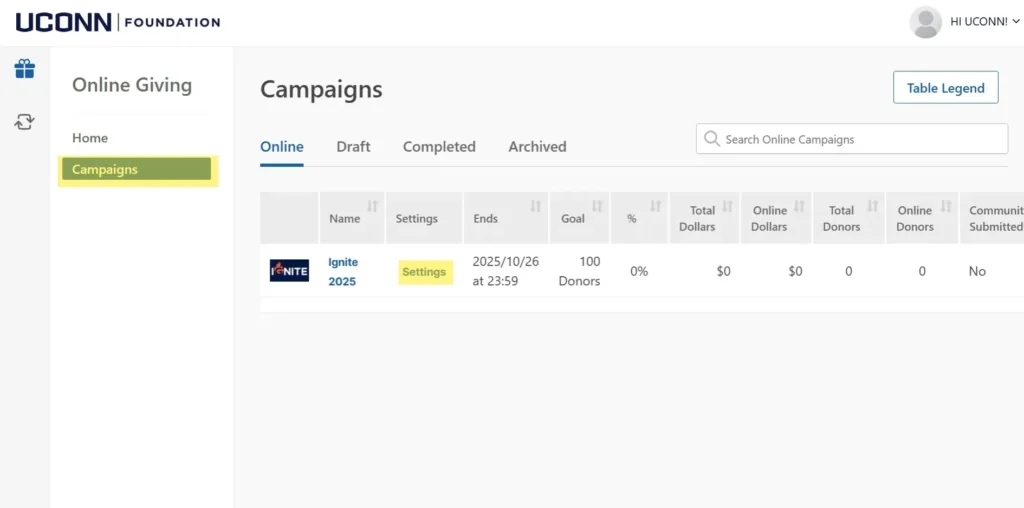
GiveCampus is aimed at institutions with more sophisticated fundraising operations. Instead of trying to reduce fundraising to a single donation page, it breaks the process into different areas such as online giving, events, volunteer management, and gift officer workflows.
That approach can work well for schools with dedicated advancement teams and multiple fundraising programs running throughout the year. Different teams can focus on different parts of the donor journey while the institution manages its broader fundraising operation from the same ecosystem.
The trade-off is complexity. GiveCampus makes more sense when an institution has the budget, staff, and fundraising volume to take advantage of its broader toolkit. Smaller schools running occasional campaigns may find a simpler platform easier to manage.
Key Features:
- Four modular solutions: Online Giving, Gift Officer, Events, Volunteer Management
- AI-assisted content generation and wealth alerts (higher tiers)
- Digital wallet support (Apple Pay, Google Pay, Venmo, PayPal)
- GC Outreach – branded email, text, and video messaging built into every module
- Year-end and fiscal reporting
Pricing:
Fully custom and modular – no public flat number.
- Each solution (Online Giving, Gift Officer, Events, Volunteer Management) is priced separately by usage – dollars raised, number of volunteers, number of users, or number of guests
- Pricing is layered on top of a platform edition (Essentials, Professional, or Enterprise)
- GiveCampus mentions accessible pricing plans for independent schools on request
Pros and Cons
User Feedback:
👍
Stephanie B.
“What I like best about GiveCampus is how donor-centered and advancement-focused the platform is. It was clearly built with fundraising teams in mind, making it easy to create engaging giving experiences while also simplifying the behind-the-scenes work for staff.”
G2 Review
4. Snap!Raise: Best for Single-Season Athletic & Activity Campaigns
Snap! Raise focuses on a very specific problem: helping school teams, clubs, and activity groups run fundraising campaigns without putting all the work on coaches or volunteers.
The platform takes a managed approach rather than simply handing users a fundraising dashboard. A dedicated representative helps guide the campaign, while digital outreach tools make it easier to reach families, supporters, and other potential donors.
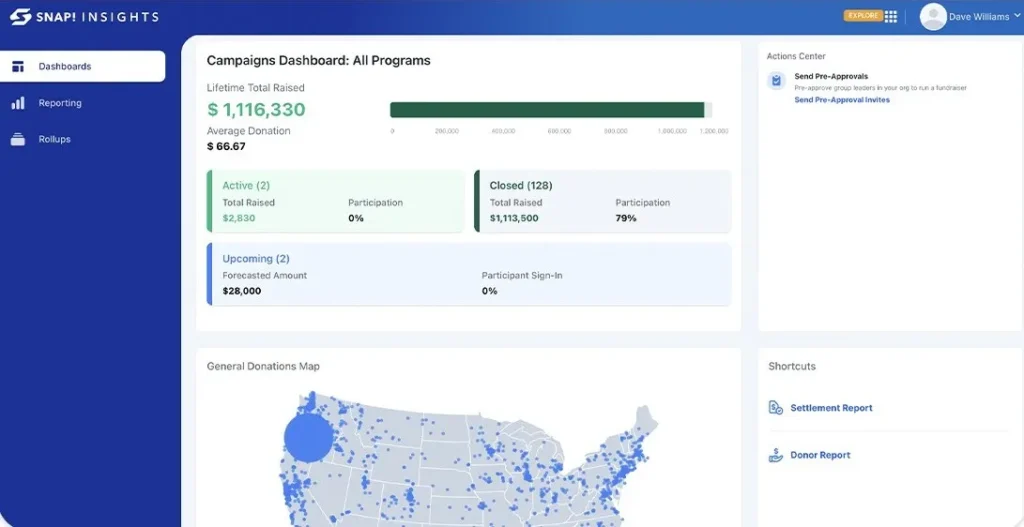
That hands-on model is the biggest reason to consider Snap! Raise. It can take much of the administrative work out of a short campaign, although organizations should weigh that convenience against the portion of funds that goes toward the service.
Key Features:
- Dedicated rep guides setup, outreach, and strategy for each campaign
- QR codes and automated weekly email/text outreach
- Snap Store for team merchandise, with a share of sales going to the program
- Rolling donor and contact lists that carry over year to year
- Optional guardian-led setup for younger participants
Pricing:
- No upfront cost
- Schools typically keep 80% or more of what they raise, per Snap!Raise’s own FAQ – meaning roughly 20% or less goes to fees and service costs
- Better rates are available for schools running multiple campaigns
Pros and Cons:
User Feedback:
👍
Karl U.
“The best part of snap raise is the ease of setting up a campaign and the website. Everything was setup in a prompt fashion and changes were taken care of quickly.”
G2 Review
5. OneCause: Best for School Auctions, Galas & Live Events
OneCause is built around fundraising events, so its strengths become most obvious when donations happen alongside an auction, gala, or other live experience.
Instead of treating the event and the fundraising campaign as separate activities, OneCause brings ticketing, guest management, mobile bidding, donations, and event reporting into the same workflow. That can make a significant difference when an organization has to manage hundreds of guests and transactions during a single evening.
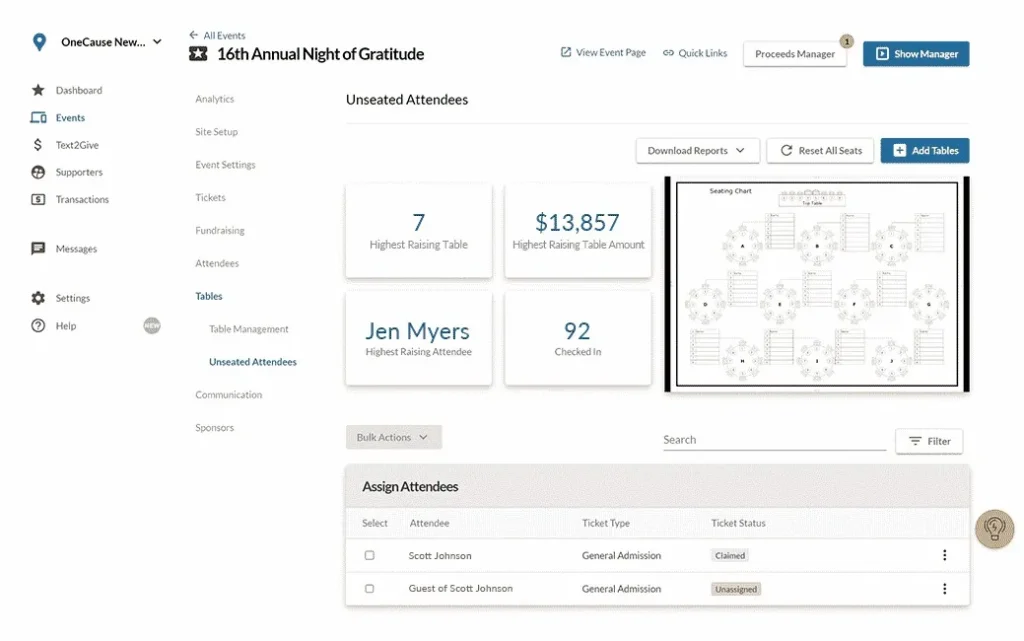
The platform is less compelling if your main requirement is long-term alumni engagement. But for schools that rely heavily on annual auctions, galas, and other event-based fundraisers, its specialization is a clear advantage.
Key Features:
- Mobile bidding and auction management
- Text2Give for in-room, phone-based donations
- Event ticketing with table and guest management
- Peer-to-peer fundraising pages
- Real-time event and revenue analytics
Pricing:
Two clear paths.
- Pay-As-You-Go – starts at $200 plus a 5% fee on funds raised, capped so there’s a known maximum
- Professional Auction & Events – flat $2,995/year, with processing fees starting around 2%
Pros and Cons:
User Feedback:
👍
Emily D.
“I have been using the Fundraising platform for 3 years. I am so impressed how they have grown it and committed to continuous improvement. Every single event, something has been added, enhanced, and upgraded.”
Capterra Review
6. Givebacks (formerly MemberHub): Best for PTAs & Districts Needing State-PTA Integration
Givebacks is designed around the day-to-day needs of parent-led school organizations. Instead of focusing exclusively on donations, it combines fundraising with memberships, communications, payments, stores, events, and other administrative tasks that PTAs, PTOs, and booster clubs regularly handle.
That broader approach can be useful for organizations that run several types of fundraisers throughout the school year. A group might use the platform for a membership drive in one month, an online store the next, and a ticketed fundraiser later in the year without having to introduce another system each time.
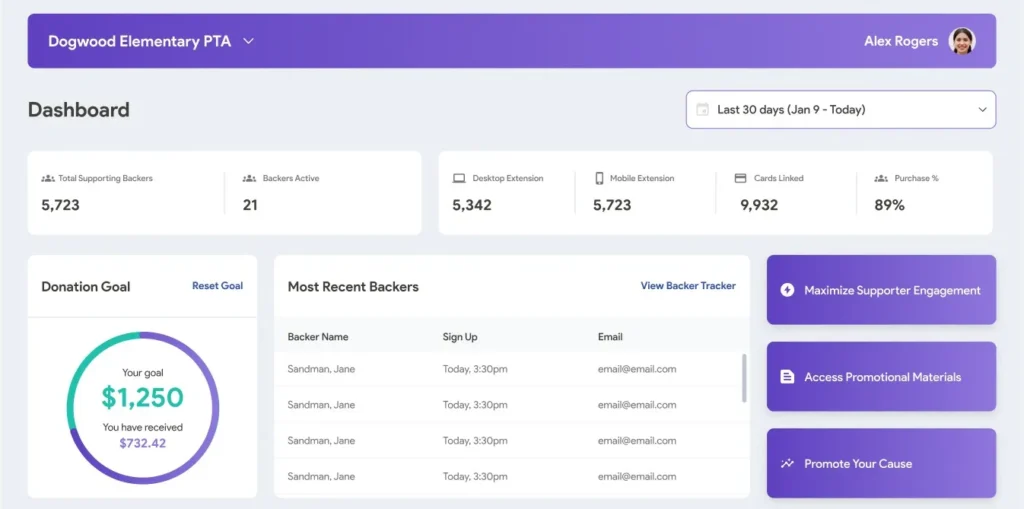
The main consideration is pricing complexity. Givebacks offers different fundraising models with different transaction costs, so organizations should calculate the actual cost based on the types of campaigns they expect to run.
Key Features:
- Direct integration with ~40 state PTA membership databases
- Storefront and point-of-sale app for merch and in-person sales
- Full fundraiser suite: crowdfunding, a-thons, ticketed events, auctions, raffles
- Merchant-funded rewards program for passive fundraising
- Compliance and multi-chapter reporting tools
Pricing:
- Pro – $499/year
- Premium – $599/year
- Partner – custom, for school districts and multi-chapter organizations
Transaction fees are layered by product type:
- Direct Donations – 0% platform fee + 1.99% + $0.49 processing
- Fundraiser Percent model – 7.5% platform fee + processing
- Fundraiser Tip model – 0% platform fee (donor-covered) + standard processing
- Online store/POS – 1.05% + $0.65 platform fee + processing
Pros and Cons:
User Feedback:
👎
Trustpilot Review
“My children’s school used Givebacks (formerly MemberHub) to manage donations for a fundraiser. I’ve taken part in many online fundraisers over the years and never encountered problems like those with Givebacks.”
Common Mistakes Schools Make When Choosing Fundraising Software
Choosing on Lowest Price Alone, Ignoring Total Cost of Ownership
A platform advertising “0% platform fee” can still cost more overall once processing fees and defaults are added in.
- Always calculate platform fee plus processing fee together, not separately
- Check whether the quoted number is capped or open-ended
- Compare that all-in cost to flat annual subscriptions apples-to-apples, not fee % vs. flat $
Picking a One-Off Campaign Tool for What’s Actually an Ongoing Alumni Relationship Need
This is the single most common mismatch in this category.
- A tool built for single campaigns won’t carry donor history into next year
- Schools sign up for something fast and cheap for a walk-a-thon, then find a year later they have no record of who their best donors are
- If you’ll fundraise year after year, treat this as a CRM decision, not a checkout-page decision
Ignoring Mobile Experience
- A donation flow that’s clunky on mobile loses donors mid-checkout, regardless of how good it looks on desktop
- Test the actual giving flow on a phone – not just the marketing screenshots – before choosing
- Check event registration and ticketing on mobile too, not just the donation page
Not Checking Who Holds the Funds or the Payout Delay
- Some platforms deposit donations directly into your organization’s own account
- Others act as the merchant of record and hold funds before disbursing on a schedule
- This affects both cash flow and your risk exposure if a vendor runs into financial trouble
- Confirm this before signing – especially for larger campaigns where the delay could matter
How to Choose the Right Fundraising Platform for Your School
The best fundraising platform depends on how your school actually raises money. Before comparing prices and features, start with the type of fundraising you plan to do.
- Running a single athletic or activity campaign? A managed campaign platform like Snap!Raise may be the simplest option.
- Planning auctions or fundraising events? OneCause is built specifically around event-based fundraising.
- Managing a PTA or booster club? Givebacks combines fundraising with membership and organization management.
- Running structured giving campaigns? AlmaShines offers tools for giving days, peer-to-peer fundraising, and donor engagement.
- Managing a larger advancement operation? GiveCampus is better suited to institutions with more complex fundraising programs.
- Building long-term alumni relationships? Gradnet combines fundraising with alumni management, events, mentoring, and community engagement.
The key question is simple: are you looking for a tool to run a fundraiser, or a platform to build an ongoing fundraising community? Once you answer that, the right options become much easier to narrow down.
Onboard Gradnet to Simplify Your Next School Fundraiser
Fundraising works better when it isn’t disconnected from the rest of your alumni community.
Gradnet brings fundraising, member management, events, mentoring, communications, and alumni engagement into one platform. Instead of managing donor information across separate tools, every gift, every RSVP, and every connection builds toward the same picture of your community – not five disconnected ones.
If your goal is more than running a single campaign – and you want to build stronger alumni relationships that support fundraising over time – Gradnet is worth a closer look.
Ready to see how it works?
A Smarter Way to Build Community
Gradnet centralizes everything—members, events, and fundraising—so your community can grow effortlessly.