


Membership Payment System: How Organizations Manage Recurring Member Payments

Pabel Khan
Digital Marketer
A membership payment system is a tool that helps organizations collect dues, manage recurring payments, and track member payment status in one place.
It automates renewals, reduces missed payments, and replaces manual billing tasks like spreadsheets and email reminders.
Organizations use a membership payment system when generic payment tools no longer support tiered memberships, renewal logic, or clear reporting.
The result is better member retention, accurate financial tracking, and less administrative work for membership teams.
When Organizations Actually Need a Membership Payment System?
To prevent using manual operations (spreadsheets, checks) which are too time-intensive, to automate recurring billing and enhance retention, or to afford secure and real-time payment processing dues, events, and donations, organizations need an exclusive membership payment system.
It is very important to expanding organizations or those that require high volume of transactions.
Research shows that automated systems reduce missed payments and improve member retention, helping teams focus on engagement instead of administrative tasks.

Recurring Payments Become Hard to Manage Manually
When membership counts rise, manual billing leads to mistakes and delayed payments. Automated recurring billing ensures members are invoiced correctly, reminders are sent, and renewals are tracked.
Studies report that automating payments can reduce late or missed payments by up to 40%, improving organizational cash flow.
Administrative Workload Grows Too Large
Without automation, staff spend hours reconciling payments, sending reminders, and updating records.
This administrative burden slows operations and increases errors. Platforms with automated billing save time, letting teams focus on member engagement, events, and strategic initiatives.
Payment Experience Affects Membership Retention
Members expect convenience. Online membership payments and auto-renewals make it easier to stay enrolled. Data shows automated payments can increase retention rates by 15–25%, as members no longer miss deadlines or struggle with manual payment processes.
Financial Accuracy and Forecasting Improve
Integrated payment systems reduce errors, provide accurate membership dues management data, and improve revenue forecasting.
This visibility helps organizations plan growth, allocate resources efficiently, and make informed decisions.
How a Membership Payment System Works in Practice?
A membership payment system is not just software—it’s a workflow solution for organizations struggling to manage recurring payments.
Instead of chasing dues manually, it automates payment collection, tracks renewals, and keeps member records updated.
Real-world data shows that organizations using automated systems reduce missed payments by up to 47% and free admin time for strategic initiatives.
Member Sign-Up and Payment Collection
When a new member joins, the system collects payment online and records membership details automatically.
For example, the Alumni Association of Boston University switched from manual invoicing to an automated system and reported a 25% reduction in payment errors during the first year.
The system supports one-time fees, tiered memberships, and recurring billing, ensuring accuracy and smoother onboarding.
Automated Renewals and Reminders
Automated notifications prevent membership lapses. The National Soccer Coaches Association of America implemented auto-renewal reminders and reduced membership drop-offs by 18%, as members no longer missed deadlines.
Failed payments trigger immediate follow-ups, saving admins from chasing dues manually.
Admin Reporting and Insights
Admins get dashboards showing paid, pending, and failed transactions. The Association of Fundraising Professionals reported that after switching to an integrated payment system, reconciliation time dropped by 30%, and financial forecasting became more reliable.
Real-time visibility helps teams plan events, allocate resources, and improve engagement efficiently.
Common Problems Teams Face With Membership Payments
Even with the best intentions, managing membership payments manually creates challenges. Organizations often underestimate how errors, delays, and poor processes affect member retention and revenue. Real-world examples show that these issues are widespread and costly.
1. Missed Renewals and Revenue Loss
Without automated reminders, members forget to renew.. Recurring payment failures without follow-ups leave gaps in cash flow, impacting planning and operations.
2. Manual Reconciliation Overload
Tracking payments manually is time-consuming. The American Marketing Association found their admin team spent 20+ hours per month reconciling spreadsheets and bank statements.
Automated billing systems cut reconciliation time significantly, freeing staff for strategic member engagement.
3. Poor Member Experience
Slow or complicated payment processes frustrate members. The National Association of Social Workers noticed complaints when members had to manually update credit card info each year.
After switching to an online membership payment system with auto-renewals, member satisfaction and retention increased.
4. Disconnected Data
When payment records are separate from member databases, errors multiply. Organizations using integrated systems gain real-time dashboards, accurate reporting, and improved forecasting, making operations more efficient and decision-ready.
Key Features That Actually Matter in a Membership Payment System
Not all payment systems are created equal. The right features solve real administrative problems, improve membership retention, and reduce errors.
Organizations that choose systems strategically see measurable operational gains.
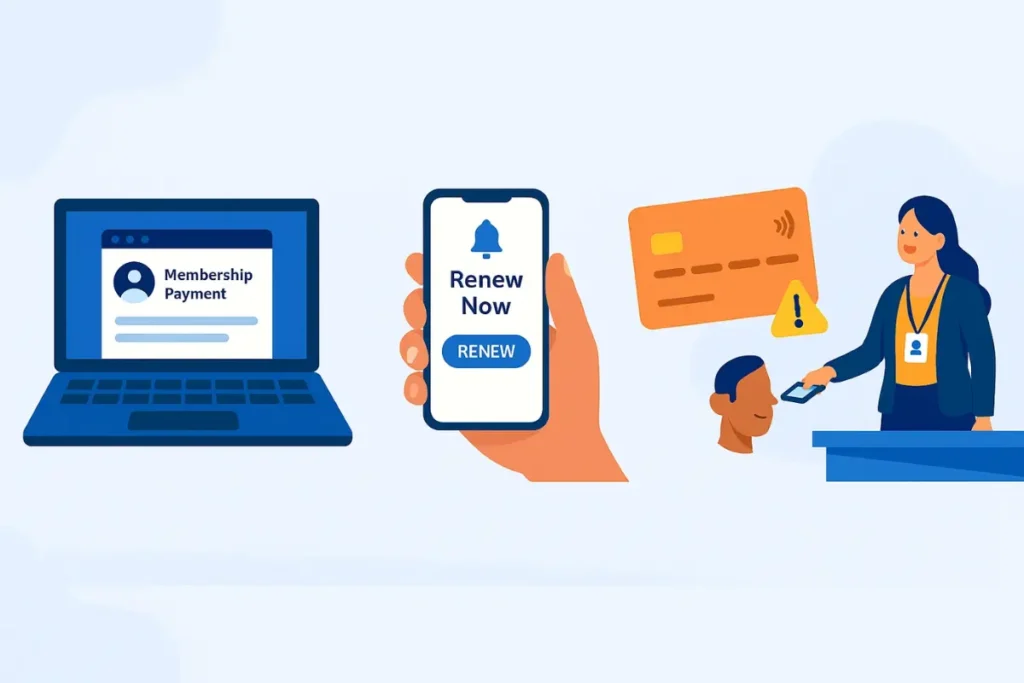
Automated Renewals and Reminders
The Harvard Club of New York City implemented automated renewal systems and reduced membership lapses by approximately 20%.
Automated recurring payments ensure local club dues are collected on time, eliminating manual follow-ups and protecting the club’s annual revenue.
Automated recurring payments ensure dues are collected on time, eliminating manual follow-ups and missed revenue.
Flexible Membership Tiers
Membership organizations often have multiple levels. The American Bar Association uses a system that supports tiered dues, early-bird pricing, and discounts for specific groups. This flexibility makes billing fair, transparent, and scalable.
Payment Failure Handling
Failed payments happen. The National Council of Teachers of Mathematics set up automatic retries and member notifications, reducing churn from failed transactions by 15%. Handling errors proactively protects cash flow and member relationships.
Member Self-Service Portals
Giving members control improves satisfaction. The Society for Human Resource Management allows members to update credit cards, track payment history, and manage auto-renewals themselves. This reduces admin work and increases member engagement.
Reporting and Exportability
Integrated dashboards provide visibility into paid, pending, and failed dues. The American Marketing Association reported 30% less reconciliation time after switching to a platform with real-time reporting, improving budgeting and strategic planning.
Membership Payment System vs Generic Payment Tools
Organizations often face a choice between a dedicated membership payment system and generic payment tools like Stripe or PayPal.
While generic tools can process transactions, they lack features tailored to recurring membership payments, tiered dues, and member management.
Real-world experiences show that relying solely on generic tools increases administrative workload, creates errors, and reduces member retention.
Using a purpose-built system centralizes billing, automates renewals, and provides insights for planning.
| Feature / Aspect | Membership Payment System | Generic Payment Tools | Real-Life Example |
| Recurring Payments | Automated, handles multiple billing cycles, reduces missed renewals | Requires manual setup or separate reminders; prone to errors | The Alumni Association of Boston University reduced late payments by 25% after switching to a dedicated system |
| Tiered Memberships | Supports different membership levels, discounts, and group pricing | Often single-level; cannot manage complex tiers | The American Bar Association efficiently manages regular, premium, and student memberships with tiered billing |
| Payment Failure Handling | Automatic retries, notifications, and member alerts | No proactive failure handling; admin must chase members | The National Council of Teachers of Mathematics reduced churn by 15% using automated failure handling |
| Member Self-Service | Members update info, track payment history, and manage auto-renewals | Limited or no self-service; increases admin workload | The Society for Human Resource Management increased engagement when members could manage payments online |
| Reporting & Insights | Integrated dashboards for paid, pending, and failed dues; aids forecasting | Manual spreadsheets; fragmented view | The American Marketing Association cut reconciliation time by 30% with real-time dashboards |
| Operational Efficiency | Reduces admin hours, errors, and reminders | High manual workload, prone to mistakes | Multiple associations report 20+ hours per month saved with automated systems |
How Gradnet Supports Membership Payments?
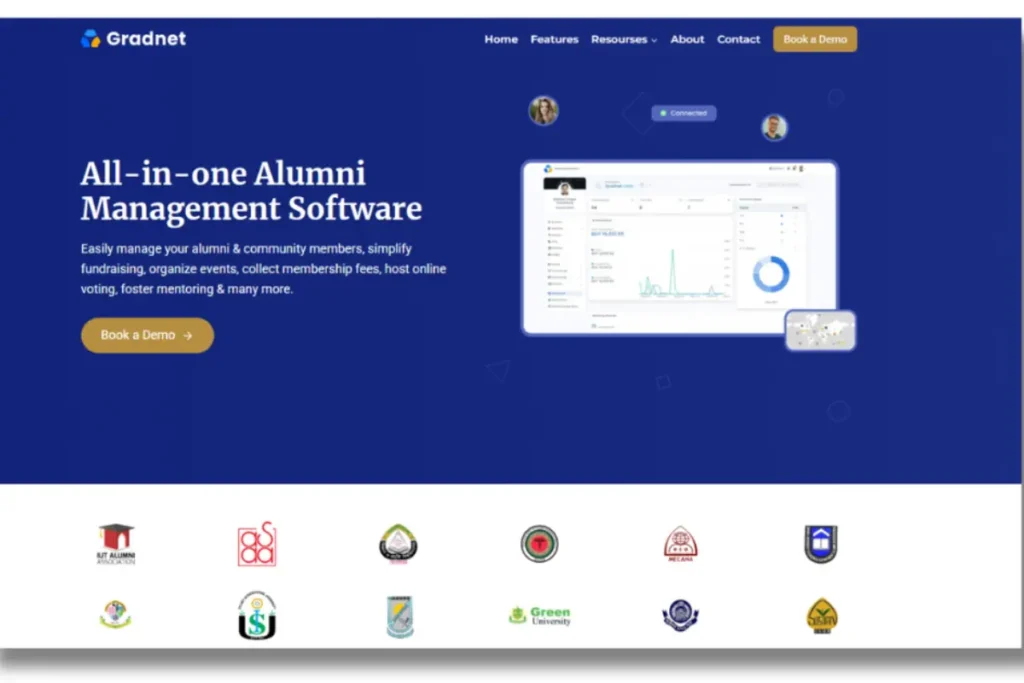
Gradnet is an all-in-one alumni and community platform that helps organizations manage membership payment workflows in a real, operational way.
It combines secure online payment collection with member directory tools so teams don’t juggle separate systems for dues, events, and engagement.
1. Integrated Online Payment Collection
Gradnet lets organizations accept secure payments online for memberships, event fees, and donations without needing separate billing software. This means associations can set up membership plans and fee structures and let members pay directly through their branded portal.
For many groups, this replaces multiple disjointed tools and saves time.
2. Automated Member Billing and Alerts
Gradnet’s system supports automated billing workflows tied to member records. Admins can track who has paid, who hasn’t, and send payment reminders without manual emailing.
For example, alumni networks using Gradnet often reduce missed renewals simply by having reminders built into the payment system, rather than relying on spreadsheets or separate email tools.
3. Real-Time Transaction Tracking
Payments in Gradnet are tied to member profiles, so teams always have a clear view of paid, pending, or failed payments. This visibility helps budgeting and planning without exporting data to external tools. Real-time dashboards let admins respond quickly to issues like failed payments or expired cards.
4. Member Experience and Self-Service
Members get a seamless experience: they can pay dues, download receipts, and update their payment details from their own profiles. This reduces support requests and improves overall satisfaction. Gradnet’s integrated payment flow makes it easy for organizations to keep members engaged and renew on time.
Managing membership payments doesn’t have to be complex. Gradnet simplify recurring payments, automate renewals, and connect member data.
Learn more about Gradnet to see how it can save your team time and improve member retention.
What to Evaluate Before Choosing a Membership Payment System?

Choosing a membership payment system is not only about taking payments. It affects renewals, admin workload, reporting, and member retention.
Many organizations choose tools too quickly and face problems later. Evaluating the right factors upfront helps avoid switching systems after a year.
Membership Size and Billing Complexity
Start with your current and future size. If you manage hundreds or thousands of members with different membership levels, the system must support tiered pricing and renewals. Simple payment tools struggle when billing rules become complex.
Recurring Payments and Renewal Control
A strong system should manage recurring payments automatically. If your team sends manual renewal emails every year, that is a sign automation is missing. Renewal logic should be tied directly to member records, not handled separately.
Admin Time and Workflow Fit
Look at how much time staff spend on billing tasks. Many alumni teams lose hours each month updating spreadsheets and checking bank transfers. A good system reduces manual work and keeps payment status visible in one place.
Member Self-Service Experience
Members expect easy online payments. When members frequently ask for invoices or payment confirmations, the system may lack self-service tools. Easy access improves satisfaction and reduces support requests.
Reporting and Financial Visibility
Decision-makers need clear reporting. If payment data requires manual exports, forecasting and planning become harder. Real-time dashboards support faster and better decisions.
Conclusion
Choosing a membership payment system should be based on renewal complexity, member volume, admin workload, and reporting clarity. If your team relies on spreadsheets, manual reminders, or disconnected tools, those gaps grow over time and hurt member retention.
A dedicated system delivers long-term operational stability by automating recurring payments, reducing errors, and improving financial visibility. A platform like Gradnet makes sense when membership payments must stay connected to member records, renewals, and engagement workflows, not managed as isolated transactions.
Ready to Streamline Membership Payments and Improve Renewals?
Explore how Gradnet connects payments, member records, and engagement workflows. Book a demo to see how it can reduce errors and save your admin team time.
FAQs
Is a membership payment system different from billing software?
Yes. Unlike general billing software, a membership payment system integrates with member databases, manages tiered memberships, handles renewals, and tracks engagement. It focuses on long-term membership management, not just one-time transactions.
Can members update their payment information themselves?
Yes. Most membership payment systems allow members to update credit cards, view payment history, and manage auto-renewals. This self-service reduces admin workload, prevents missed payments, and improves overall member satisfaction.
What features should I look for in a membership payment system?
Key features include automated recurring payments, tiered membership management, payment reminders, self-service portals, and reporting dashboards. These improve efficiency, reduce errors, and help teams make better decisions.
How does a membership payment system improve member retention?
By automating renewals, sending reminders, and providing smooth payment experiences, a membership payment system prevents lapses, reduces failed payments, and keeps members engaged for longer.
Is a membership payment system suitable for small organizations?
Yes, even small organizations benefit. Automation reduces admin tasks, ensures accurate payment tracking, and prepares the system to scale as membership grows.
A Smarter Way to Build Community
Gradnet centralizes everything—members, events, and fundraising—so your community can grow effortlessly.